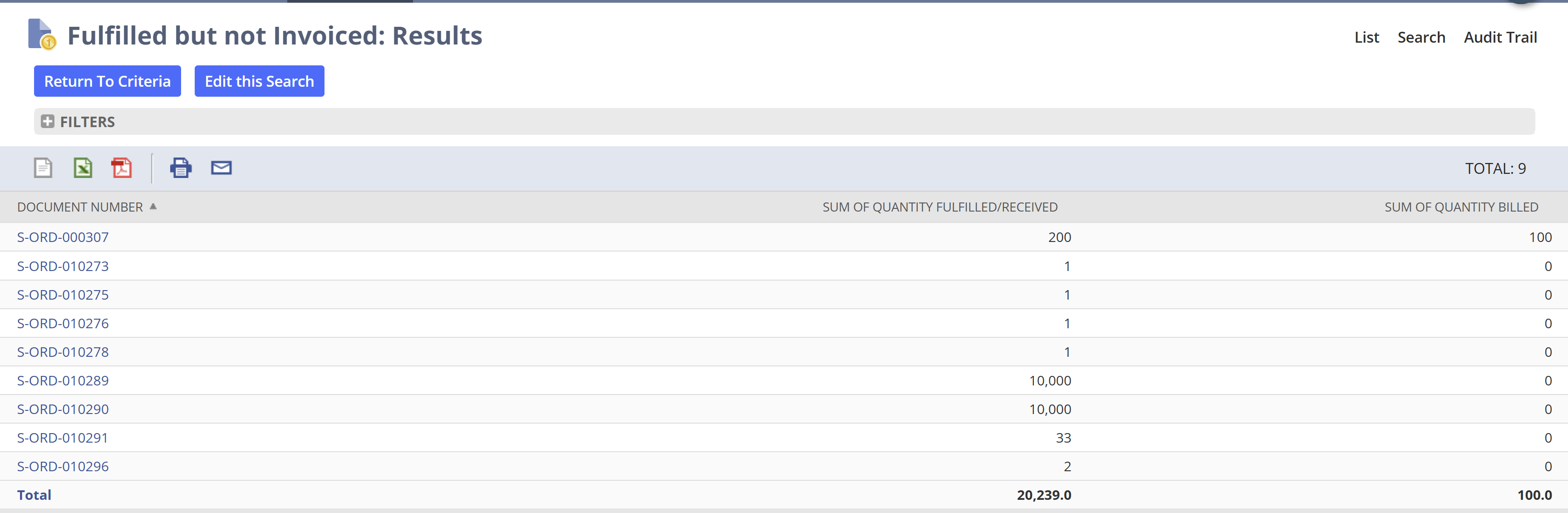
More than 500 orders were fulfilled. The invoices, payments, and warranty records never followed.
Automation
Systems Leadership
Revenue Operations
01Overview
The products shipped. The revenue stalled.
Fulfillment should have moved every order toward revenue. Instead, it became the point where hundreds of transactions disappeared.
More than 500 sales orders sat in the fulfilled but not invoiced report. Some were invoiced before fulfillment. Others were fulfilled first, then never invoiced at all.
Customers said they never received invoice emails. Without an invoice, they would not pay. Some requested that payment terms restart, delaying cash the company had already earned.
The failure reached beyond collections. Product warranties began from the invoice date. When no invoice existed, there was no dependable warranty start record.
Accounting became the cleanup team. Employees already wearing several hats traced missing transactions, corrected accounts, resent documents, and reconstructed what the system should have completed automatically.
02The Challenge
One broken handoff threatened cash, trust, and customer protection.
The problem did not belong to one department. It lived between sales, fulfillment, accounting, customer communication, and warranty support.
Each subsidiary could move through the process differently. An invoice might appear before fulfillment. Fulfillment might happen without an invoice. An invoice could exist but never reach the customer.
Every exception required another person, another manual check, and another opportunity for delay.
The company faced slower collections, disputed payment terms, unreliable records, and incomplete warranty histories.
NetSuite had also lost employee confidence. People hesitated when I proposed more automation because previous system failures had already created additional work.
Their resistance was reasonable. The system had not earned their trust.
03Approach
I rebuilt the process around evidence, exceptions, and trust.
01
Listen to the people carrying the burden
I interviewed everyone who touched the process. I asked what they received, what they completed, what failed, and what they needed before a transaction could move forward.
02
Map the process that actually existed
I traced the complete path from fulfillment to cash receipt. I compared subsidiary differences, invoice triggers, email failures, payment disputes, warranty dependencies, and accounting cleanup.
03
Build automation with a safety net
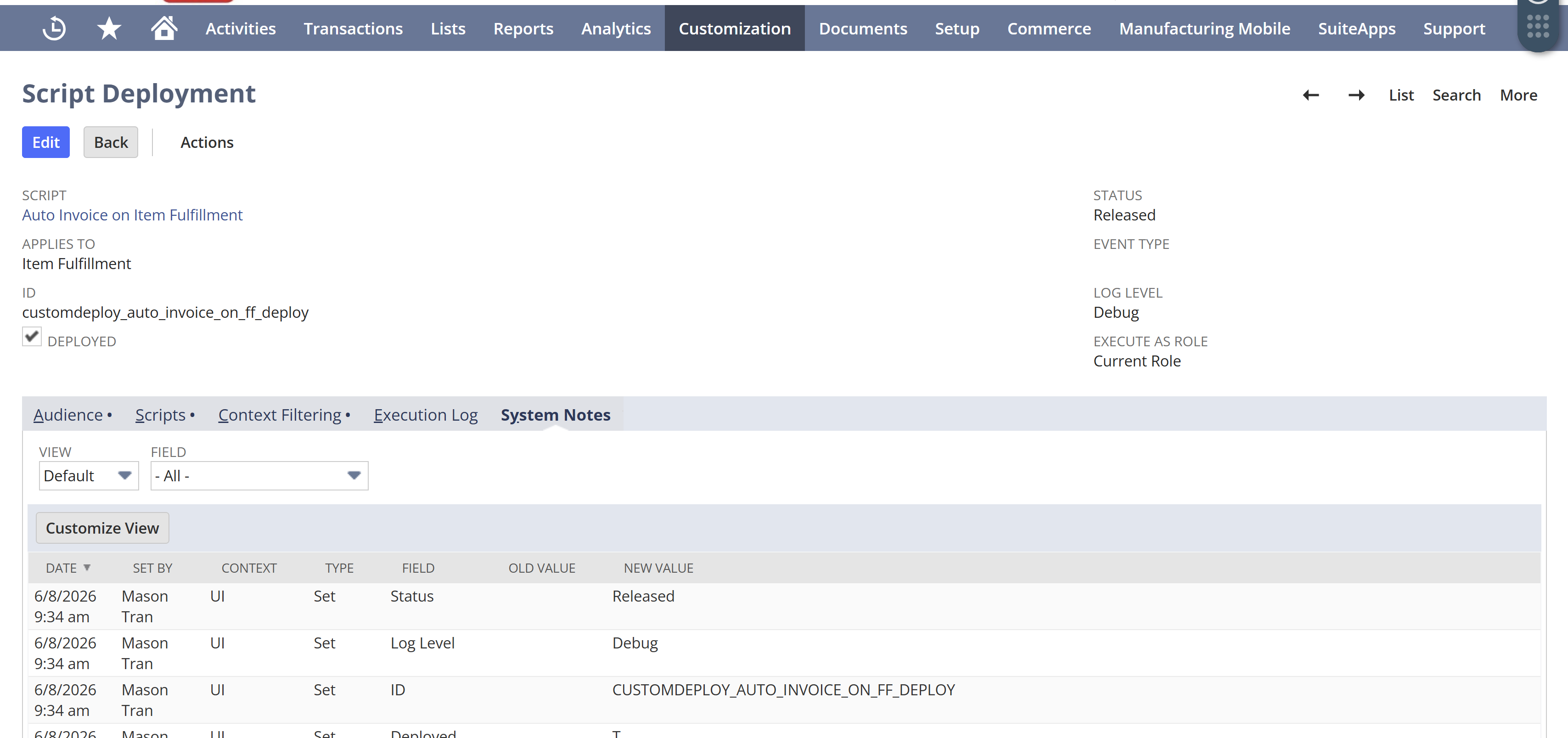
I made fulfillment an automated control point. NetSuite generated the invoice when business rules were satisfied. Scheduled checks found exceptions that still required attention.
04
Replace promises with visible proof
I demonstrated the workflow, created instructions, reviewed exceptions with employees, and compared each monthly report. The improving numbers helped the system earn trust again.
04Outcome
The missing revenue queue fell from 500 to zero.
The fulfilled but not invoiced report became the scoreboard.
Early monthly comparisons showed 50 percent fewer exceptions. Continued monitoring and correction reduced the queue to zero by the twelfth month.
Customers received invoices sooner. Payment terms became easier to defend. Warranty dates became traceable. Fewer transactions required manual correction.
Accounting recovered time previously consumed by investigation and cleanup. The team could redirect that time toward reporting, reconciliation, and work requiring professional judgment.
The work became part of 22 NetSuite workflows built from scratch. Together, these systems reduced companywide errors and operational costs by 50 percent.
The transformation required no new platform or additional headcount. It required ownership of a process crossing departments, systems, and two subsidiaries.
From 500 Stalled Orders to Zero
Fulfilled but not invoiced sales orders across twelve months
The exception queue climbed to 500 sales orders during the first four months. Automation and scheduled checks reduced it to zero during the following eight months.
500Peak fulfilled but not invoiced sales orders
0Sales orders remaining by month twelve
22NetSuite workflows built from scratch
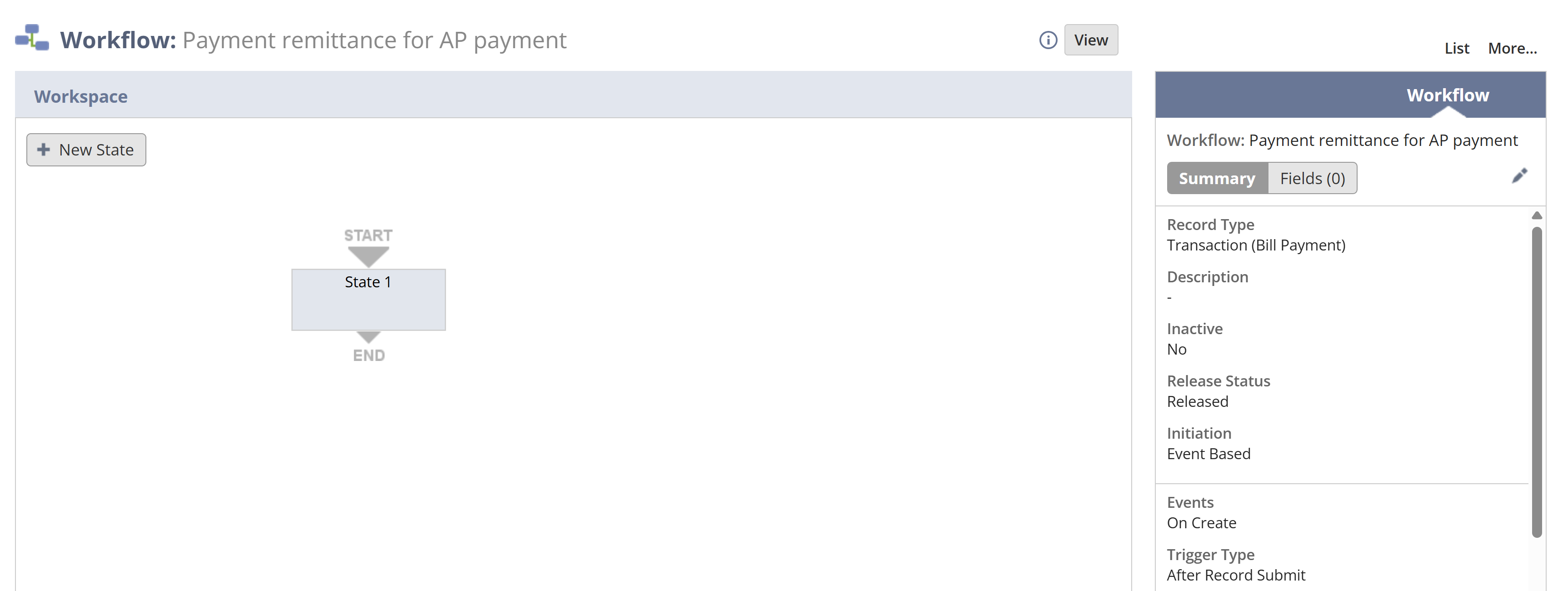
Payment remittance moved from a manual handoff into a repeatable NetSuite workflow.Mason Tran deployed the script supporting the automated process.