01
Overview
Sixty percent of sales moved through partners with no obligation to prioritize ETI.
ETI sold highly specialized products through independent distributors serving narrow technical markets. These partners were important, but ETI was only one manufacturer among many in their portfolios.
A distributor agreement did not mean its salespeople understood ETI’s products, kept ETI visible on their website, or recommended ETI when a customer needed a solution. Some partners had strong historical sales but were declining. Others had market access but purchased only occasionally. New accounts could be recruited, yet many required significant support before producing their first order.
Because distributors controlled their own priorities and customer relationships, ETI could not simply instruct them to sell more. The company had to determine which partners could grow, understand what prevented them from doing so, and make ETI easier and more profitable to represent.
02
The Challenge
The decline did not have one obvious cause.
- Some distributors carried competing manufacturers.
- ETI represented only a small portion of their total portfolio.
- Distributor salespeople had limited time to learn a niche technical product.
- Product information on partner websites was incomplete, outdated, or absent.
- Some partners needed technical support before they could confidently recommend ETI.
- New distributors were counted as accounts before producing meaningful activity.
- Marketing could not see whether partners were promoting ETI or merely accepting occasional orders.
- Treating every distributor equally consumed resources without producing equal returns.
The real question became: which distributors deserved additional investment, and what would make their teams actively sell ETI rather than merely carry it?
03
Approach
I turned a flat account list into a managed portfolio.
-
01
Find where the decline was coming from
I reviewed distributor performance account by account instead of relying only on the total channel number. The analysis compared current sales against the prior year, order frequency, recent inactivity, product mix, historical account value, new versus established accounts, geographic or customer coverage, and potential that was not reflected in current sales. This revealed that the channel did not have one uniform performance problem. Different distributors required different responses.
Not Every Distributor Needed the Same Intervention
Distributor prioritization framework
Strategic Potential
Protect & Recover
Performance review, sales coaching, updated content, technical support
Invest & Expand
Joint demand activity, broader product adoption, additional support
Deprioritize
Reduced customized investment, monitor only
Maintain Efficiently
Standard materials, transactional support
DecliningCurrent Sales PerformanceGrowing
Distributor investment was based on current performance, future potential, and demonstrated commitment, not account status alone.
-
02
Categorize accounts by the action they needed
I grouped distributors according to commercial reality: Protect, important revenue producing accounts showing signs of decline. Grow, capable partners purchasing below their potential. Activate, new or inactive distributors requiring a first meaningful sale. Maintain, transactional partners with limited growth potential. Deprioritize, accounts showing neither meaningful ability nor motivation. This prevented the team from giving identical attention to every distributor.
-
03
Prioritize the accounts where intervention could change the outcome
High priority accounts received deeper performance reviews and more frequent communication. I worked with the sales team to understand what each distributor sold, which customers it served, which competing products it carried, and where ETI was losing attention. The objective was not simply to contact partners more often. It was to identify a specific commercial obstacle for each account.
-
04
Make ETI easier to represent
Many distributors did not need another general company brochure. They needed material their salespeople and customers could use immediately. I developed product content packages containing clear product descriptions, customer applications, technical documentation, product images, reliability and support information, website ready content, links to relevant ETI resources, and sales materials for customer conversations. This reduced the time and technical effort required for a distributor to add, explain, and promote ETI products.
-
05
Turn partner websites into active channel touchpoints
I worked with distributors to place ETI products and content on their websites. Each distributor received a unique UTM link leading to ETI. Google Tag Manager and Analytics recorded visits arriving through those links. The traffic was not treated as the primary business outcome. It served as evidence that a distributor had completed an activation step and was creating measurable exposure for ETI.
From Distributor Account to Active Revenue Partner
Distributor activation journey
- 1Performance Review
- 2Account Priority
- Does the distributor have sufficient ability and motivation?
- 3Partner Plan
- 4Product Content Package
- 5Website ActivationDistributor referred visits tracked by a unique UTM link
- 6Sales Coaching
- 7Technical Support
- 8First Opportunity
- Is the distributor demonstrating measurable commitment?
- 9First Order
- 10Expand or Reassess
Partner commitment was built through observable commercial actions, with additional investment following demonstrated engagement.
-
06
Coach sales around partner specific opportunities
I coordinated with the internal sales team so distributor outreach reflected each account’s situation. Declining partners received focused recovery conversations. Growth partners received product and customer development support. New distributors received structured first order onboarding. Technical questions were connected to the appropriate ETI specialist. Account follow up continued beyond the initial recruitment conversation. This connected marketing support with the human sales activity needed to move a distributor toward revenue.
-
07
Manage partners through an operating cadence
Distributor management became an ongoing process rather than a collection of disconnected requests. Performance reviews considered revenue trend, ordering frequency, product breadth, website placement, partner referred visits, communication activity, technical support requests, first order progress, and evidence of customer opportunities. Partners demonstrating commitment received more support. Accounts that remained inactive were returned to a lower investment category.
04
Outcome
The channel became a managed portfolio instead of a static account list.
The program helped ETI move from treating distributors as a static account list to managing them as a performance portfolio.
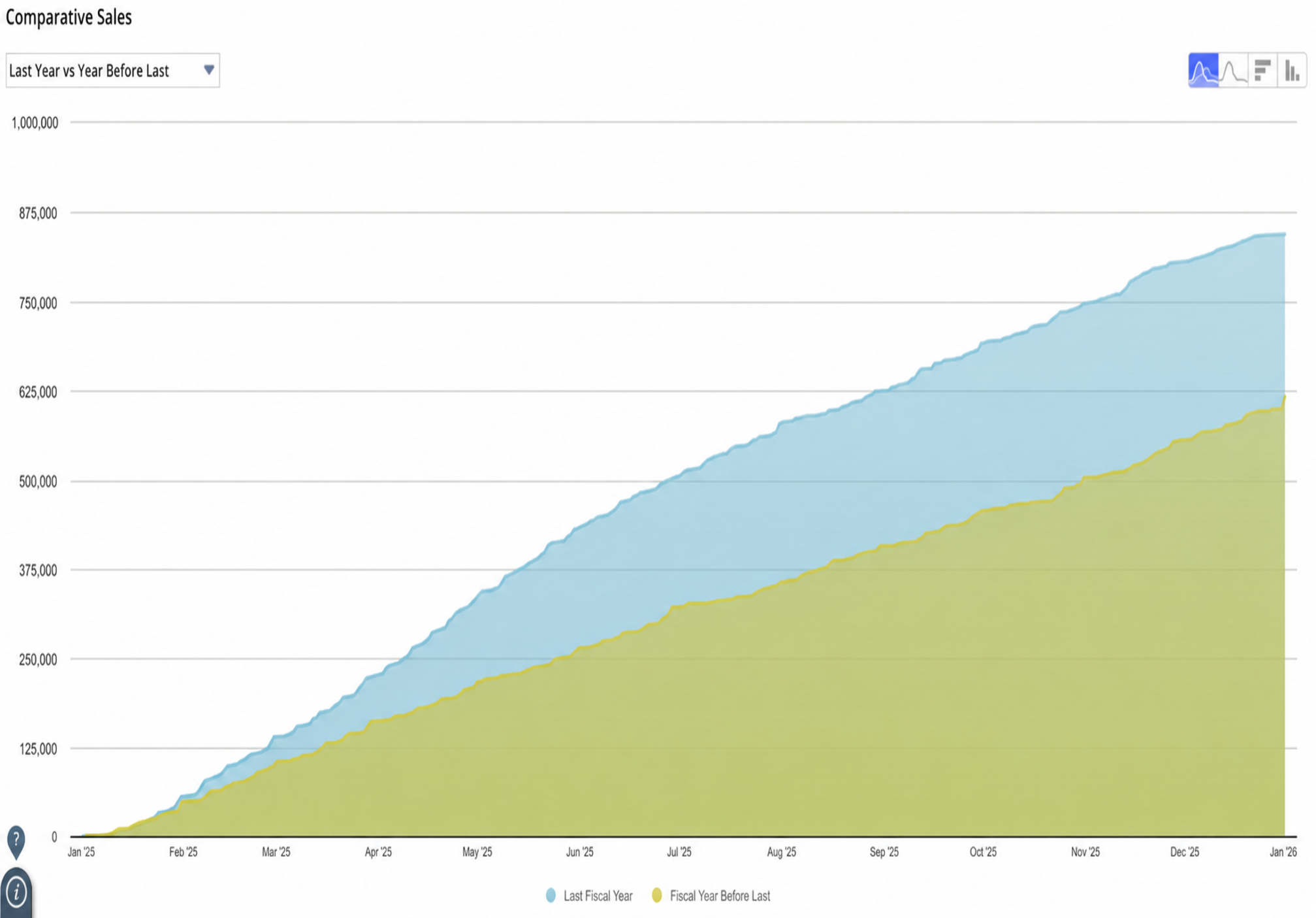
Five new distributor accounts were onboarded within 90 days. Distributor sales continued to represent approximately 60 percent of product volume, while the broader business recorded 37 percent year over year sales growth.
The program contributed to that growth. Available evidence does not isolate distributor marketing as the sole cause.
The deeper accomplishment was managerial. ETI gained a repeatable method for identifying partner potential, concentrating support, activating new distributors, improving partner visibility, and connecting marketing activity to distributor sales performance.
A More Active Distributor Channel Supported Business Growth
Verified outcome metrics, not a single source revenue attribution
-
37%
Overall sales growth year over year. The distributor program contributed but was not the sole cause.
-
60%
Share of product sales generated through distributors.
-
5
New distributor accounts onboarded within 90 days.
The program’s contribution is supported by channel scale, partner onboarding, and overall business growth. It is not presented as single source revenue attribution.