Customers still depended on equipment Company A no longer supported. I built a lower risk path from uncertainty to ETI.
Go to Market Strategy
Channel Marketing
Lifecycle Campaigns
01Overview
Company A left the market. Its customers remained in the field.
Company A stopped selling and supporting its waveguide dehydrator product line. Its installed equipment remained inside critical satellite and telecommunications systems.
Some units operated at remote sites high in the mountains. A failure could require travel, specialized labor, replacement materials, difficult installation, and costly service interruption.
Customers faced an uncomfortable choice. They could continue relying on outdated equipment without dependable support, or replace a familiar product inside a sensitive operating environment.
Distributors faced another risk. They could hold outdated products while their customers expected answers, replacement options, and technical assistance that Company A no longer provided.
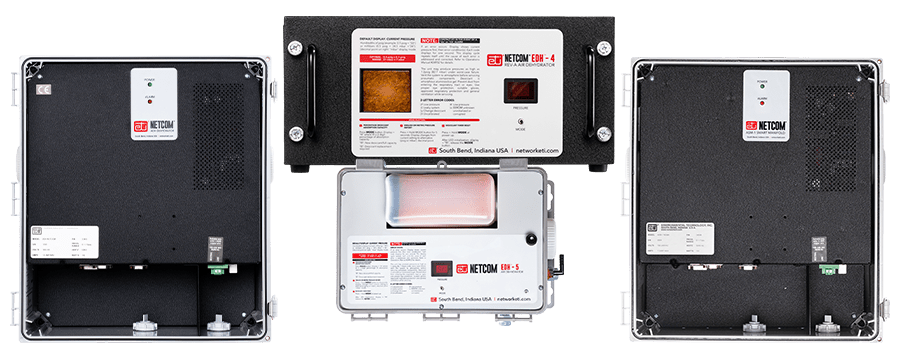
ETI had more than 50 years of industry experience, a supported replacement line, documented reliability, remote monitoring, programmable alarms, and direct access to technical specialists.
The opportunity was significant, but it would not remain open forever. ETI needed to convert product abandonment into a credible replacement path before another competitor owned the transition.
02The Challenge
The familiar product felt safer, even after its support disappeared.
Company A had existed in the category longer and remained familiar to many buyers. Familiarity initially reduced the emotional comfort of switching, even when the old product had become a liability.
The direct customer journey involved engineers, buyers, operations leaders, and executive decision makers. Every role evaluated a different form of risk.
Engineers understood the systems and expected technical precision. Buyers examined price, warranty, and purchasing terms. Operations leaders considered maintenance and field access. Decision makers evaluated continuity, downtime, and supplier stability.
The distributor journey was equally complex. Buyers evaluated inventory, margin, sales potential, customer support, and the risk of recommending a replacement their customers might reject.
The sales cycle was long because the product was expensive and technically important. Buyers needed confidence before changing equipment installed in critical environments.
Stakeholders still wanted immediate campaign results. They expected sales before the market had completed technical evaluation, budget approval, and internal decision making. Paid advertising could have increased activity before ETI understood which messages and audiences created qualified demand. I chose to protect the investment through research, testing, and measured expansion.
The leadership challenge was clear. I had to create urgency without exaggerating risk, respect technical buyers, align distributors, train sales, and prove momentum before the full revenue result appeared.
03Approach
I turned abandonment into a lower risk path forward.
01
Define the market opening before choosing channels
I treated the competitor exit as a market capture opportunity, not a temporary promotion. The strategy began with affected customers, installed products, distributor relationships, technical requirements, purchase timing, decision roles, and the consequences of waiting.
02
Build the offer around risk reversal
Customers with eligible equipment purchased during the previous five years received an easier trade in path. Approved customer tiers could receive discounts reaching 25 percent, plus one added warranty year, technical consultation, migration reassurance, and access to human support through a dedicated hotline. The message did not promise that replacement was effortless. It promised that ETI experts would help customers determine compatibility and reduce uncertainty before purchase.
03
Replace sales language with technical credibility
The product proof included replacement compatibility, comparable operating requirements, remote system access, configurable alarms, network communications, remote updates, and documented reliability exceeding 75,000 hours. Technical customers already understood their systems. The campaign respected that expertise and gave them direct access to a salesperson and engineer who could answer detailed questions honestly.
04
Create two buying systems
The direct customer system addressed engineers, buyers, operations leaders, and decision makers. The distributor system addressed buyers, sales representatives, product leadership, and customers asking distributors for replacement guidance. Each system used different value propositions, proof, timing, objections, and calls to action.
05
Personalize the message for each buying role
Engineers received compatibility, reliability, monitoring, alarm, and support content. Buyers received pricing, trade in value, warranty protection, purchasing simplicity, and total ownership cost. Operations leaders received remote support, leak detection, reduced field service exposure, and continuity information. Decision makers received supplier stability, operational risk, service continuity, and long term support. Distributor buyers received inventory protection, customer retention value, technical support access, and volume based growth opportunities.
06
Separate immediate demand from future demand
The campaign had two purposes. Demand capture targeted customers who urgently needed to replace unsupported equipment, with messages emphasizing compatibility, consultation, trade in value, warranty, and immediate access to ETI experts. Demand creation targeted customers who were not ready to replace equipment, building awareness, introducing ETI experience, explaining long term support, and establishing ETI as the future option.
07
Adapt the nurture path to buyer behavior
A missing email open did not automatically mean rejection. I tested different subject lines, send timing, and urgency before changing the campaign path. An open without action triggered a different role specific value proposition. Technical content engagement moved the prospect toward deeper product proof and engineering access. An RFQ represented clear buying intent. Automation stopped, and the account transferred to sales for pricing, technical questions, and purchase coordination. If neither nurture path produced engagement, a salesperson approached the account directly and investigated the barrier.
One Market. Two Demand Paths. One Revenue System.
How ETI adapted communication to buying role, urgency, and behavior
Automation managed repetition and response signals. Salespeople and engineers managed complexity, trust, and commercial judgment.
08
Align distributor rewards with desired growth
I divided distributors into individual tiers using historical monthly volume, annual volume, and growth potential. Each distributor received an achievable baseline and an expansion target, with additional volume unlocking incentives reaching 10 percent after the agreed threshold. The incentive encouraged gradual conversion, including distributors carrying both brands. ETI did not require an immediate channel break before the distributor and its customers were ready.
09
Train sales to continue the campaign
I trained salespeople on the promotion, role specific messaging, campaign materials, technical proof, objection handling, and the point where marketing should transfer an account. Salespeople coordinated with engineers when technical depth became more important than promotional language. This created one connected customer experience across automated email, personal outreach, engineering consultation, RFQ activity, purchase, and after sales support.
10
Use leading evidence while revenue developed
I showed stakeholders open rates, click rates, response rates, technical engagement, and RFQ activity. These leading indicators demonstrated that awareness and consideration were developing before the longer B2B sales cycle produced revenue. A/B testing protected the budget, allowing ETI to analyze, revise, and strengthen the strategy before paying to amplify an unproven message.
11
Continue beyond the first purchase
Customer conversion did not end the campaign. The lifecycle continued through technical support, warranty service, retention communication, distributor volume growth, and relevant product expansion. This turned a replacement promotion into an ongoing relationship and revenue system.
04Outcome
Awareness became adoption. Adoption became recurring growth.
The campaign created a supported path for customers and distributors affected by Company A leaving the market.
Urgent buyers received a lower risk replacement offer. Future buyers learned why ETI should be considered before their existing equipment became another unsupported emergency.
Distributors gained a current product, human technical support, promotional materials, trained sales guidance, and incentives connected to their own purchasing patterns.
Marketing and sales began operating as one system. Automation created repeated contact, behavior determined the next action, and people entered when technical judgment or trust became essential.
After two years, more customers recognized ETI and sales continued growing across direct and distributor channels.
Sales increased 37 percent year over year during the market capture period. The result included direct customers, distributors, and customers transitioning from Company A.
The campaign should not receive credit for every dollar of growth. Its value was building the market intelligence, offers, channel behavior, buyer journeys, and sales coordination supporting that growth.
The project proved that go to market leadership requires patience and commercial discipline. I chose evidence, adaptation, and human expertise instead of rushing spending before the strategy was ready.
Turning Product Abandonment Into Market Growth
How ETI reduced replacement risk and activated customers and distributors
ETI connected a lower risk replacement offer with role specific campaigns, distributor incentives, sales enablement, and 37 percent year over year sales growth during the market capture period.
37 PercentYear over year sales growth during the market capture period
25 PercentMaximum customer trade in discount by approved tier
10 PercentMaximum distributor volume incentive after threshold
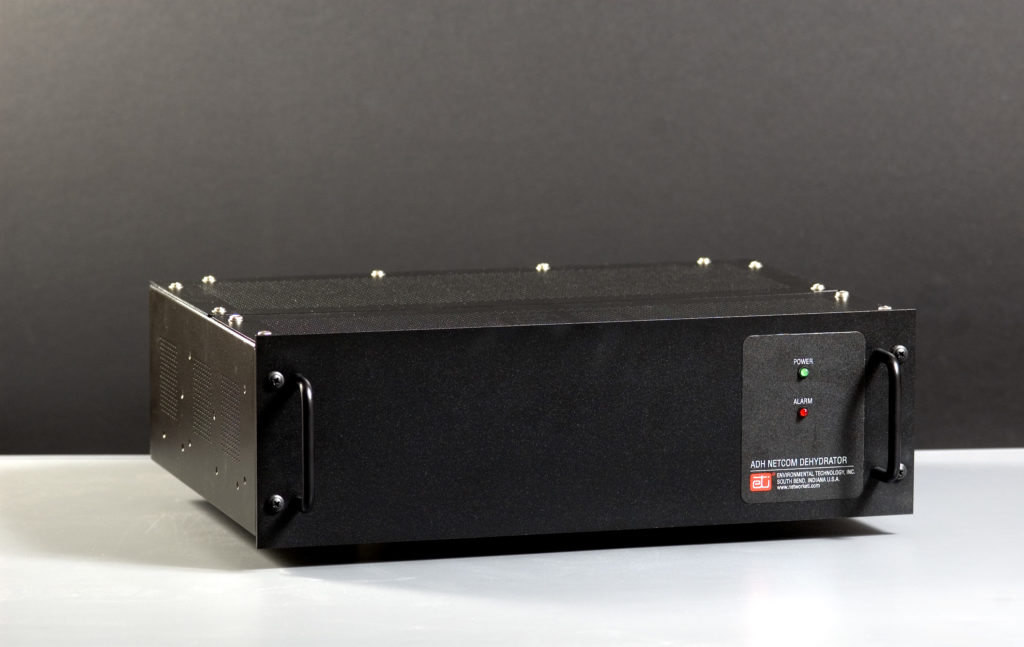
The replacement strategy offered multiple supported ETI configurations for different operating needs.Product credibility supported the campaign promise of compatibility, monitoring, reliability, and human technical support.